for your interest
The Stanza25 workshop on Saturday February 15th 2025 was FULLY BOOKED
The Stanza25 workshop on Saturday April 5th is FULLY BOOKED
TWO spaces available in June and THREE in August. See BRLSI events page to book.
February 15th participants
FEBRUARY 15TH with AMA BOLTON * SUE BOYLE * CHARLOTTE BROWNE * JOHN BULL * ALAN DAVIES * MARILYN FRANCIS * CAROLINE FROUD * CHRISTOPHER ISAAC* BELINDA LAWS * ZOE MORGAN * MIRANDA PENDER * ANN PRESTON * JUNE WENTLAND *. (13)
SUE BOYLE Poetry Society Stanza Representative for Bath introduced this year’s workshop series, The Fine Art of Poetry.

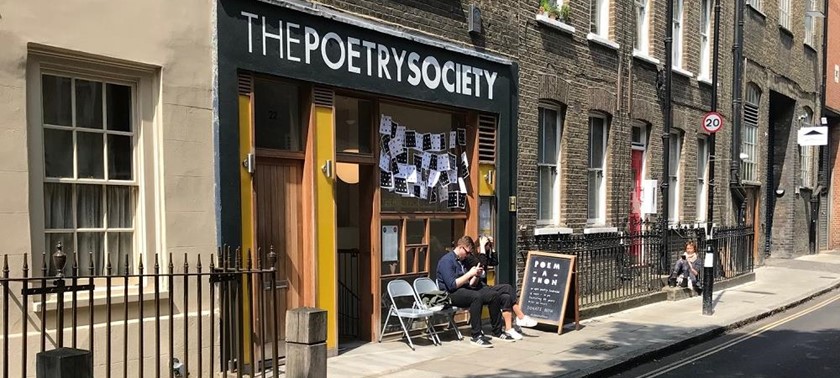
WELCOME TO THE POETRY SOCIETY
AMA BOLTON
Stanza representative for Wells told us about evenings of good poetry in a cathedral city
Readings
Competition successes and publications since November 2024
Ama Bolton : Survivor (Nexus/Metro competition 2024)
Marilyn Francis : essential items for a journey (High Window, Spring 2025)
June Wentland : Frog & The Park (Stand, Spring 2025)4
BATH HERITAGE WEEK 2025
BRLSI Heritage Week Convenor CAROLINE FROUD shared ideas for the Stanza25 contribution to this year’s September Bath Heritage Open Days week.
followed by readings about place inspired by November’s Café Days in Bath
Ama Bolton : King’s Castle Wood
Marilyn Francis: It’s a Long Way from Oxford Street, Alice
Belinda Laws : After ‘Café Days in Bath’
Ann Preston : Images of Bath
Alan Davies : Echoes of a Distant Song and RUH 12/02/25
SUE BOYLE : WHAT IS POETRY?
Can we agree the boundaries between prose, poetry and song?
Discussion, readings & reports
Chaired by John Bull, Caroline Froud and June Wentland
Time to stop for tea

DISCUSSION READINGS
Stopping by Woods on a Snowy Evening by Robert Frost
Swans Alighting by Pauline Stainer
Snow by Louis Macneice
Making Use of Rhyme
Alan Davies : He Wishes for the Cloths of Heaven by WB Yeats
CHARLOTTE BROWNE : The Uses of Poetry
MIRANDA PENDER Sherborne singer songwriter
POETRY & MUSIC

talked about her own work and introduced
A MAN I USED TO KNOW
Poem by John Freeman whose title inspired this song by Miranda
AMA BOLTON ‘The Mermaids’ Song’
Listen on https://youtu.be/Fopa5SazDEU?si=2_R4lSLZGYAEMXDz

Crafting Poetry: Key Takeaways from the discussions in our February 15th workshop
House of Sorrow, Things being Various, Things in the Darkness of Light being made Whole
A great start to our new workshop series, The Fine Art of Poetry
It didn’t take long for the people in yesterday’s Stanza25 workshop to reach to the heart of what many of us think as key identifiers of the fine art of poetry. A way of getting words to do more work than ordinarily is thought possible and in the process to create new meanings that couldn’t have been expressed any other way. ‘House of Sorrow’ came from Stanza25 poet ALAN DAVIES as the hugely resonant translation of the name of the South Wales coal mine in ‘Echoes of an Old Song’ which he read yesterday as part of our Poetry of Places set. We are hoping that Alan will be offering us a longer set on his Welsh mining heritage as part of our contribution to Bath Heritage Open Days in September this year.

Prose, Poetry or Song?
Everyone at yesterday’s workshop had been asked to bring in a set of anonymised short poems or prose poems to help us explore the day’s topic of PROSE? POETRY? SONG?
First, in small groups, we sifted the poems as a magazine editor or a competition judge would have to do, looking for three favourite poems each which had the quality we individually identified as ‘fine poetry’. These favourites were then taken into new discussion groups, to find out which one poem would surface as the agreed chosen poem for the second group.
With so much choice on the tables, so many different views of what a poem should be, so many different writing and reading histories, and working at such speed, often on a table with near strangers, it was extraordinary finally to discover the poems that survived. None of us knew what to expect. None of us came to the discussion with a particular poetry corner to fight. Many of the poems on the tables were unfamiliar to many of the people reading them. But in that clumsy experiment, what surfaced was the purest poetic gold.
Stopping by Woods on a Snowy Evening by Robert Frost
Swans Alighting by Pauline Stainer
Snow by Louis Macneice
It will be interesting to hear from the workshop participants which poems were the strongly argued ‘also rans’ in these discussions. I already know one of them was
A Marriage by RS Thomas.
Subscribers to this blog who attended yesterdays’ workshop have been invited to write about any of these four poems and some of the other discussion favourites in the comments panes below.
3 responses to “Crafting Poetry: Key Takeaways from the discussion in our February workshop”
barleybooksFebruary 17, 2025Alan’s and June’s poems and Miranda’s songs were, for me, the outstanding features of a full, exciting and demanding day of listening, reading, and passionate discussion. If we’d had twice the time it would still not have been enough to come anywhere near a definition of poetry, a discussion that’s been going on for thousands of years!Liked by 1 personReply
Ann PrestonFebruary 18, 2025‘Snow’ by Louis MacNeiceI have known this poem since I was at school and have always loved it. The language is direct and together with the vivid imagery it draws you straight into the warm, gracious sitting room of a large country house. There’s snow on the bay window but there’s a big open fire and tangerines on the table – perhaps it’s Christmas time. I can see the poet standing in front of the fire in Oxford bags and shiny brogues. It’s the late 1930s and he feels a bit of an outsider, a weekend visitor in this privileged household.But nothing is quite as clear as it first appears to be in this poem. Simple words like ‘rich’ acquire unexpected depth. Does it refer to the furnishings or the family wealth or both? Snow is ‘spawning’ on the window. It ‘s not a pleasant image. It suggests a growing, external threat to the values and lifestyle of the owners.All the senses are invoked in a series of brilliant images but each one is barbed in some way – snow behind the roses, pips in the tangerine, the fire sounds spiteful. All this duality is used to convey the suddenness, craziness and unpredictability of the world. It reminds me of ‘Pied Beauty’, but where Hopkins delights in and is grateful for ‘dappled things’, MacNeice is bewildered and overwhelmed by them. The final line is stunning, a perfect example of what some poets call a ‘killer’ line. But in the end it only reiterates the problem, reaffirming the conflict between the snow and the roses without offering any solution to the problem. If this sounds like a criticism I’m more than happy to be transported by all those amazing images. Liked by 1 personReply
Miranda PenderFebruary 20, 2025Thank you, Sue, for a wonderfully productive session, in which it was lovely to catch up with old friends and their recent achievements, and to meet some stimulating new acquaintances. The sifting method of selecting poems certainly made us focus. Unfortunately, I wasn’t quick enough to grab hold of the poem I would have put forward as my top choice, and it became a runner-up in someone else’s pile, never to be seen again! So I am going to take the liberty of reproducing it here, as I think it deserves an airing. I encountered Polly Walshe, on Instagram a couple of years ago.The Others by Polly WalsheThere is a hidden landscape on the Earth,On top of what we see or underneath,Used by the Others – I don’t know who they are –Not just down sunken lanes, on tumuliOr over fields, but in this parked up streetBelow the yellow lines, and under motorways.And retail parks. Why, for twenty years,So many chirping birds in this thin hedgeBeside the traffic lights while silence yawnsIn the hunched wood and thorny places?What is it about here sparrows prefer?And why do I sometimes stumble as if chasedAt that smooth spot by the black poplar treesWhen there is no-one’s shadow on the path?I am not one who stumbles easily.Who are The Others? I don’t know any more than does the poet, but I know exactly what she means. We can build, pave, and tarmac as much as we like, but the ancient landscape remains beneath.Ann Preston mentioned the concept of a ‘killer line’ – well, I don’t think you get much better than ‘I am not one who stumbles easily.’
 Stanza 25
Leave a reply to barleybooks Cancel reply